Almost 6 in 10 Google searches now end without anyone clicking a link. Three years ago that was unthinkable.
Back then, "search" was simple: make sure you rank well on Google, run ads on the right keywords, and the bookings would come in. That model still works, but less and less well.
This is what we see in the data from our own travel and leisure clients — and what it means for your search strategy for travel and leisure.
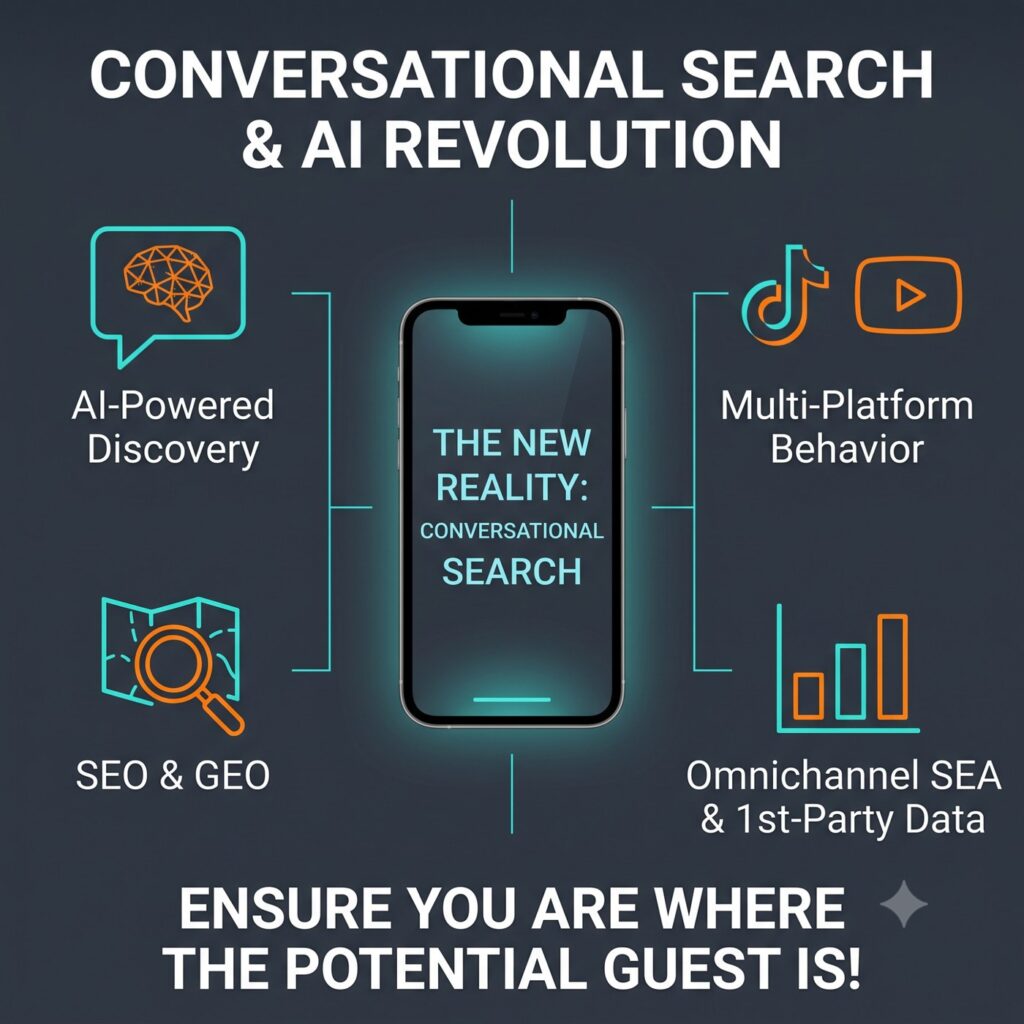
Google answers the question itself
Search once began simply: someone types a query, Google shows a list of links, the user clicks through. That model still exists, but it is losing ground fast.
In 2024, almost 60% of all Google searches already ended without a click (Search Engine Land, 2024). AI Overviews reduce click-through behavior by an average of 34.5% (Ahrefs, 2025).
And for searches with an AI Overview, paid CTR already dropped by 68% between mid-2024 and early 2026, while Google Ads budgets kept right on rising (Seer Interactive, 2026). More budget, fewer clicks.
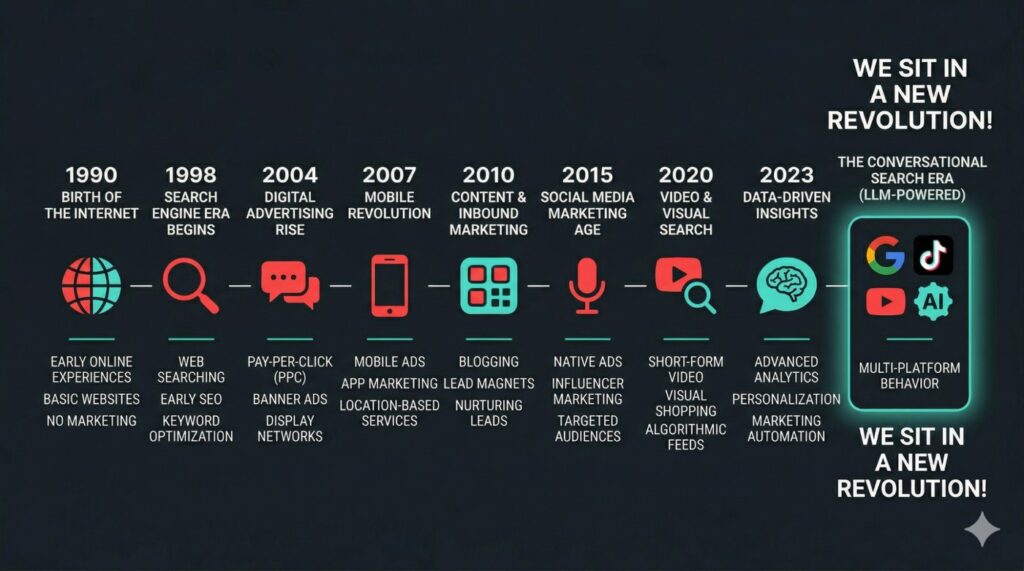
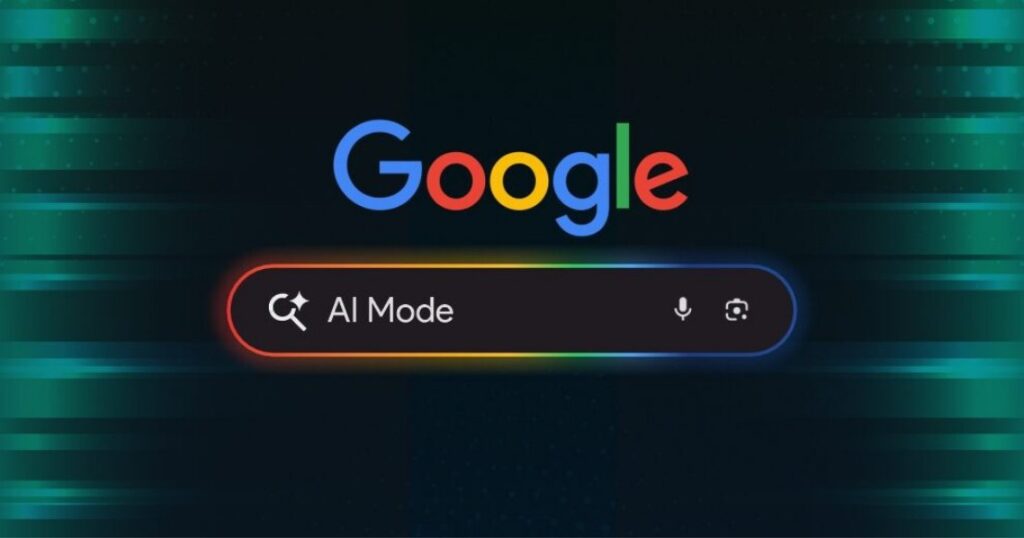
But AI Overviews have already been overtaken by reality. With the arrival of AI Mode, Google now offers a fully conversational search experience: the user has a dialogue with Google instead of receiving a list of results.
Where AI Overviews still appeared alongside the classic search results, AI Mode replaces them. The user asks a question, gets an extensive generated answer, and in many cases no longer has a reason to click through.
What we see in the data across multiple travel and leisure accounts confirms this. In many cases, CTR dropped from 55% to 20% over three years, while average CPC rose by 67%.
For other clients, both impressions and clicks declined while CPC kept rising anyway (so not a CTR problem). Lower volume, higher costs. Two different patterns, one shared problem.
The question is still there. The path to it isn't.
Search intent hasn’t disappeared. People still want to know which holiday park best suits a family with young children, whether a day attraction is worth it, or what the best glamping site in the Netherlands is. They are just increasingly asking those questions somewhere else.
Say someone searches "glamping netherlands". In 2023, they got ten blue links and clicked through to a website. In 2026, Google already provides its own overview in AI Overviews, and people can ask follow-up questions via AI Mode.
ChatGPT, Gemini and Claude go further, offering personal advice and possibly even mentioning your brand — but without a click, a cookie, or even a single data point coming your way. TikTok shows reviews from real people. YouTube shows vlogs from families who have already been there. The decision gets made before anyone visits your website.
And this isn’t a niche phenomenon. 30% of travelers have already used AI to plan their trip, and that percentage is growing fast (Adobe, 2025). Among Gen Z, 41% say social platforms are their first choice, ahead of traditional search engines (Sprout Social, 2025).
We see this confirmed in search volumes. Exploratory searches for destinations or holidays in general are declining year over year. Branded searches hold up better: people who already know what they want search directly. Anyone who wants to reach them earlier in the journey needs to be present in other places.
Informational content: less traffic, more value
The biggest shift is happening at the top of the funnel. Blog posts, inspiration guides and destination pages generate less organic traffic than before. Clicks on informational pages drop sharply following the AI Mode rollout.
At the same time, average session duration is rising. The visitors who do click through are higher quality. But there are fewer and fewer of them.
One nuance you don’t want to miss: the rise in impressions in Google Search Console that many marketers are seeing is partly a measurement artifact. Since May 2025, Google logs impressions differently, which makes the numbers look higher on paper. So don’t take that growth at face value as proof of growing visibility.
But does this mean informational content has become irrelevant? No, the opposite is true. The AI has to get its answers from somewhere. 38% of citations in AI Overviews come from Google’s top 10 (Ahrefs, 2026).
Whoever has built authority and ranks well gets cited in AI answers. Whoever isn’t there doesn’t exist in the answer the user receives. Informational pages are no longer a traffic channel — they are a visibility channel. That said, ranking well in SEO doesn’t automatically mean AI will mention you too: alongside an SEO strategy, you now need a GEO strategy to become visible in AI models.
TikTok is a search engine. Is that in your strategy yet?
More than 40% of users have already used TikTok as a search engine. Among millennials that’s 49%, among Gen Z 64% (Adobe, 2024). For the travel and leisure sector, that’s relevant: 1 in 5 TikTok searchers is specifically looking for travel destinations or experiences.
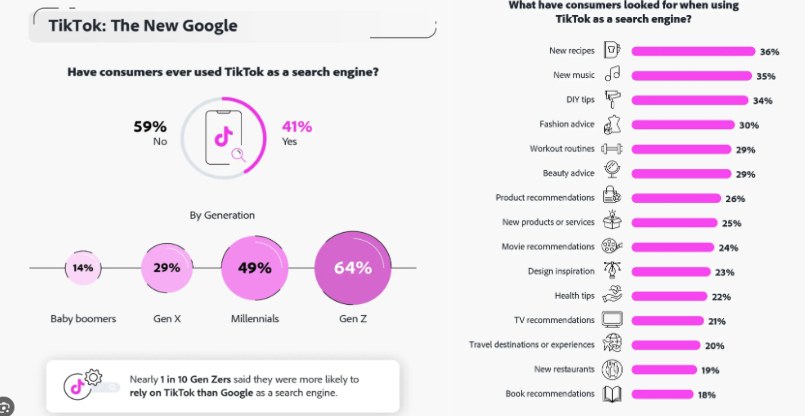
Have you already looked at what search volumes exist on TikTok for your brand or destination? We’re testing TikTok Search Ads for several clients in the sector, and the first bookings regularly come in at costs lower than regular traffic campaigns. Still early days, but the signal is there.
The big difference with Google: on TikTok, nobody searches with direct purchase intent. People come for real experiences, real stories, real people. They form an opinion long before they buy a ticket or make a booking.
That doesn’t make TikTok less interesting. It makes it an upper-funnel channel you need to take seriously, even if you already have a solid Google strategy today. Our social organic trends for 2026 show where that behavior is heading.
From SEO to Organic Search, GEO included
Search is no longer a channel. It’s an ecosystem of Google, AI Mode, AI assistants, social platforms and YouTube — and all of those places factor into the guest’s final decision.
That’s why, at Red Online Marketing, we’re making the shift from SEO to Organic Search. This isn’t a rebrand. It’s a recognition of reality: getting found without paying now means being present on Google, in AI answers from ChatGPT, Gemini and Claude, and on social platforms where people discover and explore.
GEO, Generative Engine Optimization, is a crucial new pillar in this. It’s about making sure your content not only ranks well in classic search results but is also used as a source by AI tools. Leave that to competitors or aggregators, and you leave it to others to tell your story.
What does this mean for your search strategy for travel and leisure?
Do you recognize any of these situations?
- Your organic sessions are dropping while impressions rise. That’s the AI effect at work, and it’s time to recalibrate your KPIs.
- Your cost per click is rising while volume declines. You’re fighting in a shrinking auction, and broadening your channel mix is urgent.
- You’re publishing informational content but the clicks aren’t coming. Check whether your content is being cited in AI answers and optimize for GEO, not just for Google.
- You’re not yet active on TikTok or YouTube as a search channel. That means you’re leaving an ever-larger share of the orientation phase on the table.
- You don’t have a first-party data strategy. That means you’re feeding Google’s and Meta’s algorithms empty-handed.
Bookings are still made on the website. For now. But the road there has fundamentally changed. Whoever builds a search strategy for travel and leisure around this new reality won’t just be easier to find — they’ll also be harder to displace.
Want to know how your organization is positioned in this new search landscape? Let’s take a look together.